Friday, May 17, 2013

Localiscious Event Lunch


Whereyouatmatt?, Athenas, Fusion on the Run, Box Nature Sushi, Snout and Company, Skillet Shindig? Food trucks or conference caterers? Both!

With food trucks being the latest rage, it makes sense our cutting-edge client, Living Future Institute, would want to include them in their conference. This week in Seattle, Washington, our lunches were served by local area food trucks meeting sustainable serviceware (more about that in my next post). As is our practice, we share our lessons learned with the meeting planning community. Here’s what we have learned:

  • Work with the city and venue to get permits for the trucks to park near the facility. 
  • Timing is essential. Trucks must arrive, set up and be ready to serve at the scheduled time during your program. Have clear expectations about start and stop times, and if, at any point, trucks can open for cash or public sales.
  • Pre-negotiate pricing for 4-6 basic menu options. The lunch packages offered should be worth the same dollar amount and trucks may determine their own packages with approval. 
  • Include "food trucks for dummies" step-by-step instructions on the back of the vouchers to easily inform attendees what to do. This way there is very little confusion about how to redeem them. 
  • Have a weather plan if it's raining, so people can come inside to eat. 
  • Ask for truck measurements in advance. The larger ones do not fit into one parking space and it would be problematic fitting them all in if they were all different sizes. Prepare truck owners about the need to remove any vehicles used to tow their trailers if they are not using self-contained trucks. 

The food truck lunch was a huge hit with conference participants thankful to be outside away with an array of food choices.  As meeting managers it requires an additional level of logistics and dedicated staff to coordinate the food event.  It was well worth the effort!

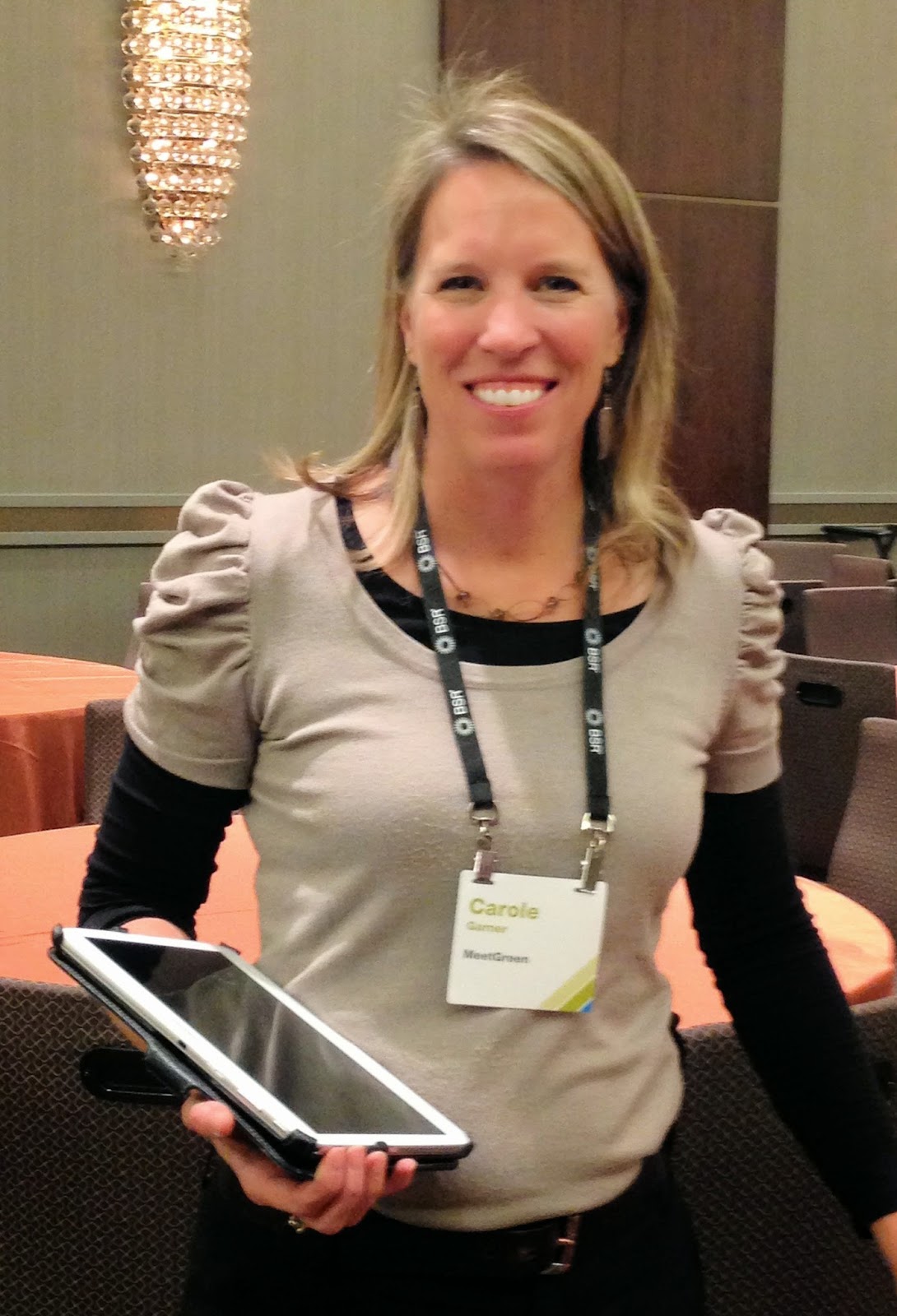
Photo:  Carole Garner, MeetGreen Project Manager, working with the vendor.  
Photo and writing credit: Shawna McKinley.

Wednesday, May 8, 2013

Don't Forget to FLOSS

FLOSS?  That's right, choose Fresh, Local, Organic, Seasonal and Sustainable food for your events and meetings.  According to Chef Steven Ward, DoubleTree by Hilton Portland, during his recent presentation at the GMIC Sustainable Events Conference, this easy-to-remember acronym will help you select a fabulous, healthy menu for your guests.

Chef Ward recommends the event planner work directly with the chef on menu decisions as they can best assess the regional supply and demand, availability of products and valued partnerships with local suppliers.  He has been successful in reducing costs for FLOSS food by purchasing seasonal products, using large volume in price negotiation with small farms, and reducing the need for packaging.

As a valuable take-away, Chef Ward offered a "Meeting Planner Checklist" which he offered to share:

  • Use the farm-to-table philosophy.  Showcase flavors in the venue's backyard using local suppliers
  • Highlight the locations, farmers and recipes of the food
  • Request fair trade products that help producers make better trading conditions, e.g. coffee and chocolate
  • Serve food in bulk whenever possible
  • Don't preset water, salad or desserts
  • Be creative with centerpieces.  Make sure they are reusable and the customer takes them home
  • Offer water stations instead of individual bottled water
  • Donate excess food to shelters and food banks
  • Look for composting both of kitchen waste and table scraps

My thanks to Chef Steven Ward for being an early adopter and unwavering champion.  I think he would be the first to admit, it wasn't always easy.   Today, his culinary creations are incredible and he has mastered the art of sustainable menus for 50 or 500 because he always remembers to FLOSS.


Thursday, May 2, 2013

Upgraded to First Class

 If the flight attendant serves your tea in a china cup with a silver spoon to stir in the delicate sugar cubes, you might ask yourself, “Is airline concerned about sustainability, or is this because am I sitting in First Class?”  That question is easily answered if you are the passenger bumping along back in Coach Class with a styrofoam cup, paper sugar packet and plastic stir stick balanced on the tray.

Air travel is one of the least sustainable ways to get to a meeting and airlines traditionally haven’t shown much regard for the environment.   However, they are currently a necessary transportation provider in this industry and sustainability is still in the “progress not perfection” stage.

There are signs several airlines are taking their first steps toward a greener future.  Horizon Airlines, having started its recycling efforts in the 1980’s, now leads the industry by collecting 90% of onboard recyclables.   Alaska Airlines reports 63 percent of onboard recyclables were collected in 2012 and their goal for this year is 70%.

Since 2004, Alaska Airlines has cut their carbon footprint by more than 30% by using fuel-efficient aircraft and GPS-based navigation equipment to fly more directly between airports.

During the last six years, United recycled more than 20 million pounds of cans, paper and plastic items from waste generated inflight and at its facilities resulting in a net reduction of 28,700 metric tons of carbon emissions.  More than 24% of United’s ground equipment fleet is electric or alternatively fueled.

United Airlines has set a goal to save 85 million gallons of fuel in 2013. The airline says this savings will equal 828,750 metric tons of CO2 or about $275 million dollars at current fuel prices.

Just this week, “NASA researchers announced commercial airlines can safely fly using plant-based biofuel, following successful test flights in California.  Bruce Anderson, a senior research scientist at Langley who worked on the project, notes these fuels are 'quite acceptable' for use in commercial jets.”

Congratulations on these small steps along the way to make air travel more sustainable, not to mention the cost savings in landfill fees and jet fuel.   On our own path to sustainability, the meeting industry salutes the airline industry and looks forward to a future where everyone drinks tea out of a china cup!

Sources:
Alaska Airlines Corporate Sustainability Report
Environmental Leader article, 4/15/13, “United Airlines to save 85m Gallons of Fuel in 2013.”
Environmental Leader article, 5/1/13, NASA Clears Biofuel Powered Jets for Takeoff

Monday, April 29, 2013

Confessions of a Dumpster Diving Team

Over the last six years MeetGreen has collected a wealth of information about event impacts.  We have entered 40 client events into our MeetGreen Calculator which provides a meta-indicator of how successful our clients have been at improving event sustainability through policy, procurement, implementation and measured results.  We are thrilled to see their efforts continue to improve overall year after year.

In addition, 32 of these events have delivered data about carbon, waste and water impacts.  We audit and analyze this information to filter for reliability and completeness under our ISO 20121 management system.

Based on this information, we estimate the average daily footprint of a typical event attendee at events we have worked to be as follows, which provides us with a baseline of comparison for client events:

319 pounds carbon dioxide per participant
 10 gallons water use at venues per participant
1.4 pounds of landfill at venues per participant
3.6 pounds of waste at venues per participant
 ("waste" includes all event discards, e.g. landfill, recycling, compost and donations)


This above is an excerpt from our 2012 Corporate Report.  For more information about how our event sustainability management system plays a key role in aligning our project teams to pursue consistent, measurable objectives to reduce our operational footprint, improve risk management and measure the impact of legacy activities, read the full report here.

Tuesday, April 23, 2013

Sustainability Quotes for Reuse


Sometimes it is one line of a speech or a sentence uttered in a hallway which provides all the inspiration you need.  I offer here, my collection of sustainable meetings related quotes, overheard at the Green Meeting Industry Council's Sustainable Meetings Conference:
 
"Sustainability is still a beta test." - Eric Ryan

"Don't forget to FLOSS (fresh, local, organic, seasonal, sustainable)." - Chef Steven Ward

"Get past the "holiday" mode of attendees while at an event." - group discussion

"What inspires you more than making money?" - Eric Ryan

"Share shamelessly." - Brian Hunt

"Sustainability: Meeting producers don't be left behind." - posted sign

"Hooray, the final standard, Accommodations, standard is published!  Now we can get going." - Amy Spatrisano and Lawrence Leonard

"I'd rather be a pirate than in the Navy." - Steve Jobs quote during a session

"Is it legal to donate leftover food?"  - question asked during a session.  Immediate and overwhelming response from the room, "YES!"

"We are all in this together."  Paul Salinger

"Make it personal.  Make it visible.  Make it possible." - Julie Baylor

...And my personal favorite,  "What would MacGyver do right now?"


Monday, April 22, 2013

You Have Probably Heard it is Earth Day

photo of Tillamook Bay Oregon by Nancy Zavada

It's Earth Day.  You can't miss it.  Every product, service, news show and community is parading out it's finery, boasting about how they save the planet.  What good global citizens we are on Earth Day.  Wonderful!  This doesn't need to be a day of boasting (we, Americans, can't help ourselves), but if flag-waving is what it takes to get more people conscious of the environmental issues, then I am all for it.

What's missing for me is the celebration of all we have accomplished day in and day out for the past year.  An acknowledgement of each change we made, sustainable initiative we implemented, and our progress (not perfection) from where we were 12 months ago today.   A recognition of our friends, co-workers, vendors and clients who have been our partners every step along the way.

So today I celebrate and give thanks to all of my partners who have made such great progress this year.  Together, we have tried new things, made a few mistakes and learned along the way.  As the momentum has grown over the years, it is really quite amazing to reflect on what we have done together!  I look forward to this next year where we will do the same, day in and day out, quietly leaving this planet better than we found it.

Thank you!

Thursday, April 18, 2013

Raise Your Hand If You Aren't Perfect


The Sustainable Meetings Industry has come so far with so many passionate professionals dedicated to making a difference and we aren't done yet.  Thought leaders at the GMIC' Sustainable Meetings Conference last week found common threads in our work in these 11 areas...

  1. It is not more expensive: building the business case
  2. Using standards to accelerate sustainability
  3. Communicating the value of being sustainable
  4. Integrating sustainability into meeting design
  5. Starting a sustainability program
  6. Measuring and reporting progress
  7. Waste not, want not: reduction and donation strategies
  8. Being weird: innovating through sustainability
  9. Beyond green: from fair wages to community action
  10. Sustainable exhibits and engaging exhibitors
  11. Convincing the masses: engaging on a larger scale
Using everything from IPads to color crayons, we unleashed our collective brain power around these topics and found creative ideas and strategies to use moving forward.  We spent the week discussing issues, sharing stories and leaning on each other for support when overwhelmed.

Early in the conference, a keynote speaker talked about "Progress Not Perfection," a motto that rings true in the sustainability world.  We are transforming an industry and have come so far, yet are sometimes disheartened by the amount left to be done. His words reminded us to celebrate the progress and not get caught up in the perfection which isn't attainable yet.  We followed his wise advice and went home with renewed hope for the future of the meetings industry and the planet.

I would like to personally thank those who were vulnerable enough to share their stories about imperfection with me either publically or privately.  You inspire me! It's hard to admit that some days, it is just not easy being green.  Luckily, we all know it is worth the effort.